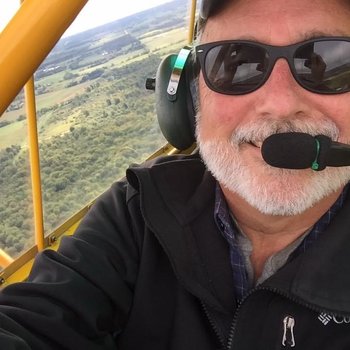
It was a cool morning; the low clouds pushed along rapidly on a brisk north wind. The weather forecast had called for showers but the wind, strong and biting, was unexpected. Ground crewmen, hurried by the chill, rushed about completing last minute details. The flight crews, delayed by the weather, had broken into two groups. The pilots, huddled in the flight planning room, studied each updated weather report. Other crew members were spread throughout the ready room. A friend and I sipped our coffee and talked about the morning’s mission.
Next to us, other crewmen silently watched the flag as it whipped and snapped about, gripped in the wind’s fury. Then, in a rush, the pilots made for the door as they called to their crews, “It’s a go, let’s do this.” Everyone stood up, moved silently towards the door, and walked to their respective aircraft. Improving weather at both departure and destination airports meant the mission was on!
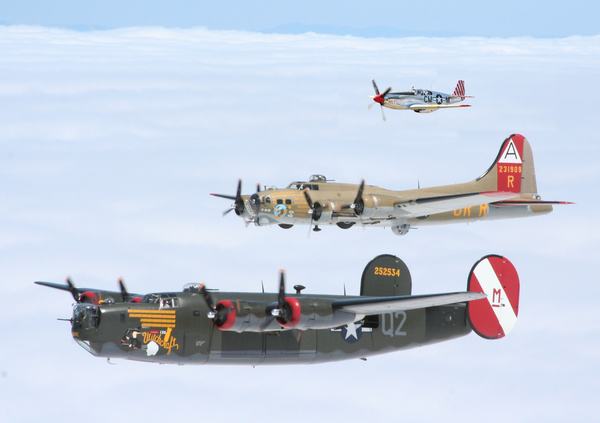
The mission, a short repositioning flight, involved only three aircraft—a mixed bag—two bombers and a “little friend.” The P-51 would serve as escort while the B-17 and B-24 were returning to base and their home squadrons. The crews were also a mixed bag, mostly older, experienced men who had seen much in their flying careers. A few replacements, new guys, had a different look about them.
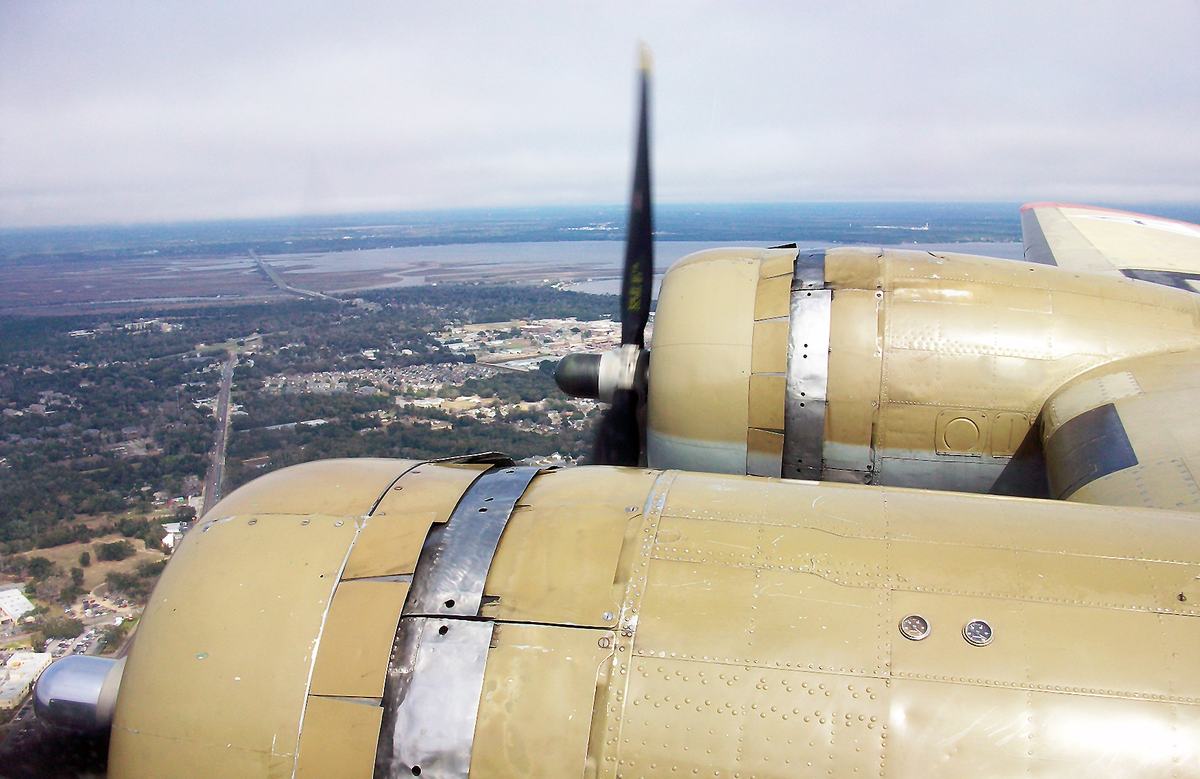
Our crew met at the left side of the B-24 and, after the requisite safety briefing by the pilot, we entered the airplane through the open bomb bay doors. My three fellow gunners and I moved aft while the pilots and crew chief moved forward. Taking our seats at the aft bulkhead we buckled in and watched as the crew chief stowed the tail strut. He smiled, flashing a thumbs up at us before closing the access door. Minutes later the four, big Pratt and Whitney R-1830 radial engines rumbled to life.
THE FLIGHT
My longtime friends, Chuck and Tina Swain, winter in Orange Beach, Alabama, these days. This winter demanded a reprieve, if only a short one, so Rose and I quickly accepted their invitation to visit. Orange Beach is just across the bridge from Naval Air Station Pensacola, home of the National Naval Aviation Museum. Chuck and I, along with a mutual friend, Pete Combs, had set off for the museum early that morning. It was a good thing we did; serendipity you could call it. While reviewing several new exhibits, Ryan Keough, a mutual friend of Chuck and Pete, walked up to us. Ryan was in town with the Collings Foundation. Pensacola was a stop on the organization’s 2014 Wings of Freedom Tour.
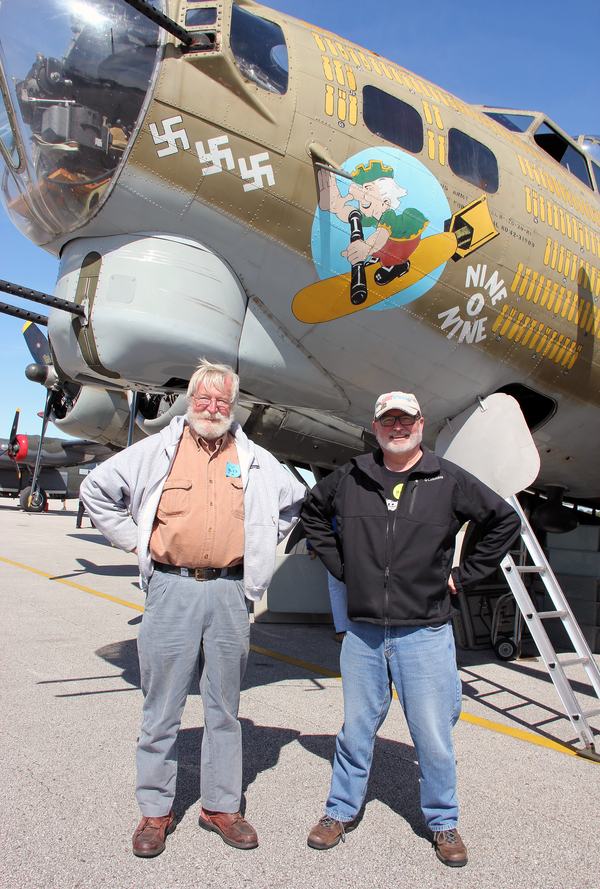
After completing our tour and late lunch at the museum’s Cubi Bar Café we headed to Pensacola Aviation Center at the Pensacola Gulf Coast Regional Airport (KPNS). Ryan met us at the hangar that was serving as their operations base. This tour stop included three of the foundation’s aircraft: North American TP-51C Mustang, Consolidated B-24J Liberator, and Boeing B-17G Flying Fortress. After inspecting the airplanes, Ryan shared that they would be moving the next day, March 2, from Pensacola to Jack Edwards Airport (KJKA) in Gulf Shores, Alabama. Rides were available for the short repositioning flight and while Pete would be headed home to Atlanta, Chuck and I were easily able to clear our schedules.
We arrived at the airport the next morning to a cold, cloudy, damp day that quickly turned windy. Planned departure was 1100. We met and shared stories with others who would be joining the crew. The already low clouds dropped even lower as the wind came up and Pensacola went IMC. Mobile, Alabama, well to the west was clearing, while Gulf Shores was barely VMC. The decision to delay our departure was a good one and the weather improved dramatically about 90 minutes later. The B-24 was the last to depart with takeoff at 1303.
The winds provided for some pretty good turbulence, making the flight all that much more realistic. Shortly after takeoff we were cleared to move about the aircraft. Only three non-crew members were on this flight so we were able to experience every station, even on this short flight. I headed aft to the tail gunner position first. I was able to stand fully erect almost the entire way aft. Getting into the turret was another matter. This mid-60s aviator, in less than perfect shape, struggled a bit getting into the seat. I made it into the turret but it was a good thing the Focke-Wulfs and Messerschmitts weren’t chasing us. After a too short time I extracted myself and began moving forward.
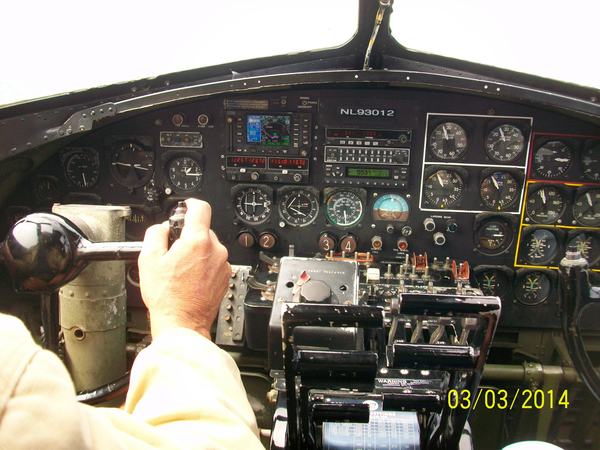
My next stop was the waist gunner positions. This aircraft is equipped with all original equipment in these positions: guns, ammo boxes, and oxygen bottles. The only thing missing were ammo belts and spent casings. I discovered drag from the wind acting on the barrel was much greater than expected. The ball turret, while not operational in this aircraft, is installed. I continued through the bomb bay, lowering myself to my hands and knees, and crawled forward to the bombardier position.
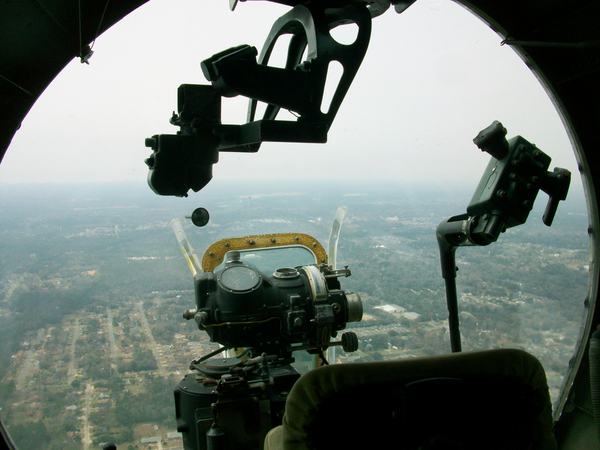
The Norden bombsite and all original bomb controls are installed and appear as if the aircraft is ready for its next mission. Up and forward is the nose turret. The remaining flight time was getting short and this turret appeared even more difficult to enter. I satisfied myself with standing just outside the turret and leaning into it. I was amazed at the air noise in this most forward position of the airplane. The view was amazing.
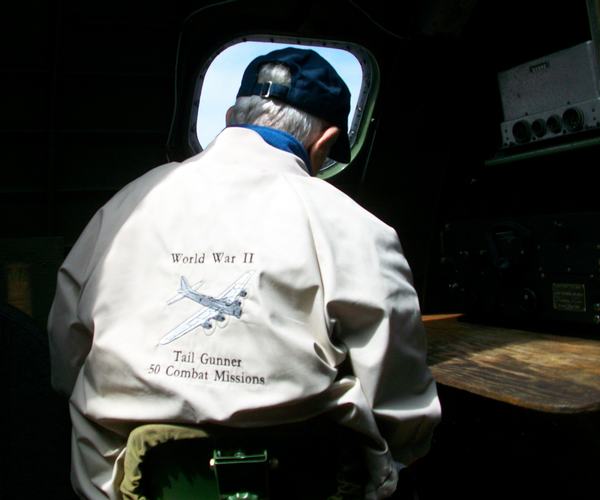
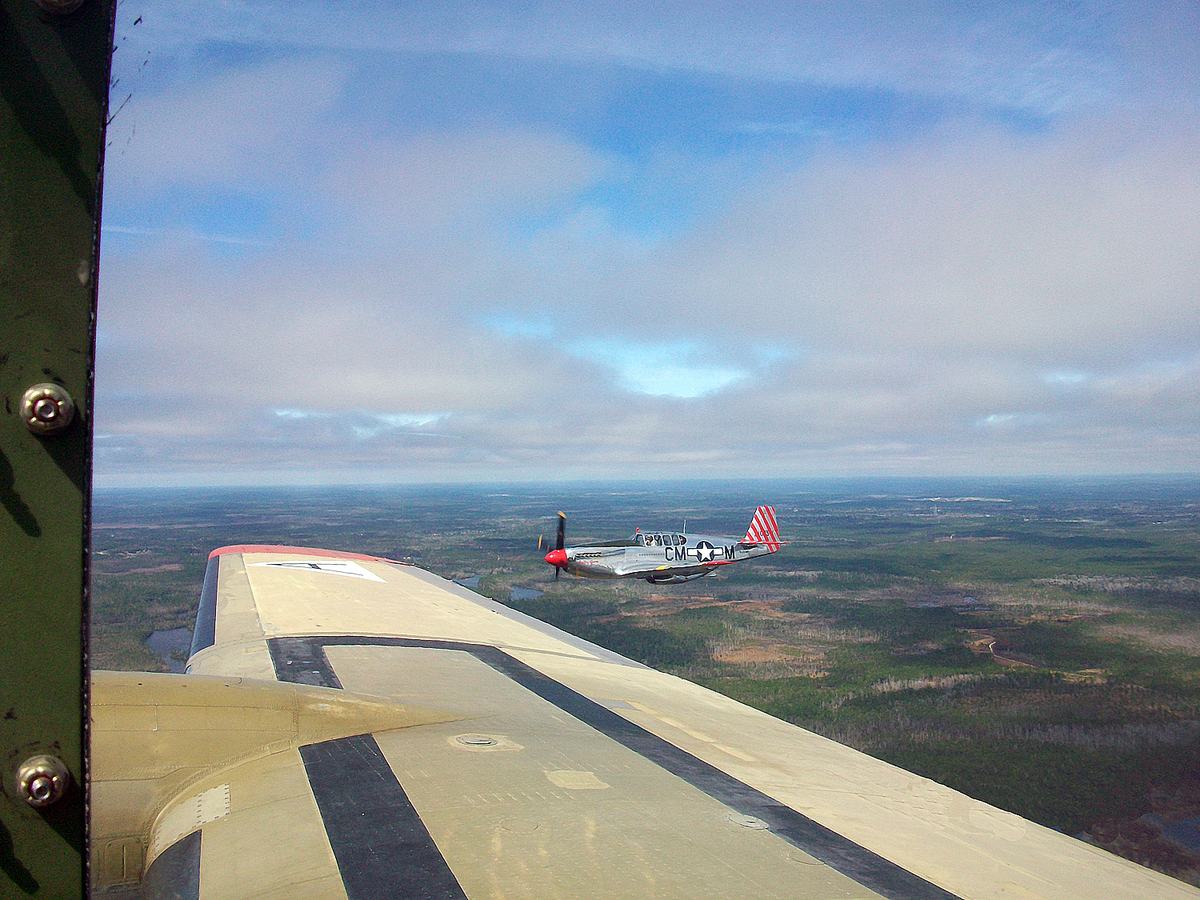
The signal from the flight deck to return to the rear gunner positions came all too soon. Joining the other gunners, we buckled in and watched as the P-51 formed up with us on the aircraft’s right side. We flew an overhead approach to Runway 27, lowering the landing gear as we turned left downwind. The wind, a 90-degree crosswind gusting to 18 knots, provided a challenging approach and landing. Rolling out, we exited the runway and were greeted by marshallers who guided us to our parking spot next to the B-17. Engine shutdown left the props ticking over as the events of the flight flooded all of my senses. Ground crewmembers completed their tasks and gave the signal to unbuckle our seatbelts and begin our exit of the airplane. Like a time machine, this flight took me back to a much different era and gave me an appreciation for the efforts of the Collings Foundation.
THE COLLINGS FOUNDATION
Founded in 1979, the purpose of the Collings Foundation is to organize and support living history events that enable Americans to learn about their heritage through direct participation. Since 1989 a major focus of the Foundation has been its “Wings of Freedom Tour,” featuring World War II aircraft. There are two goals for the tour: honor the sacrifices made by our veterans that allow us to enjoy our freedom and to educate visitors, especially younger Americans, about our national history and heritage. In its 24-year history the tour has stopped at more than 2,500 airports from Alaska to Florida and greeted an estimated 3 million visitors.
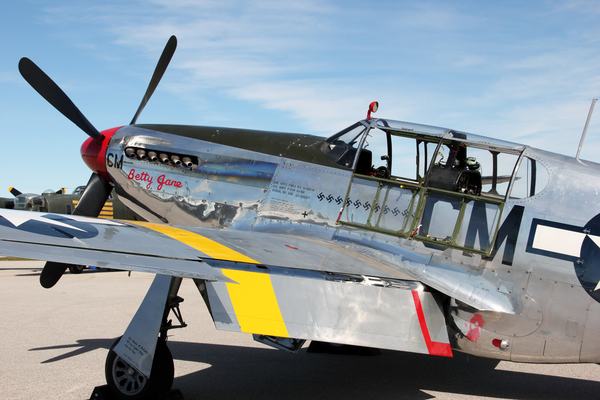
This year’s 25th anniversary tour began January 17 in Leesburg, Florida. Moving across the lower tier of states the tour will reach California in mid-April. Additional stops are being added on a regular basis. Walk-through tours are priced at $12 for adults and $6 for children 12 and under. World War II veterans get their tour for free. Flights in either the B-17 or B-24 are $450. Flight training in the P-51 is $2,200 for 30 minutes and $3,200 for a full hour. Visit the organization’s website at www.collingsfoundation.org for updates to the schedule.